The Secret Life of Books Hidden stories. Untold truths. Every book
“To be, or not to be: that is the question.”: Meaning, Context, and Literary Significance
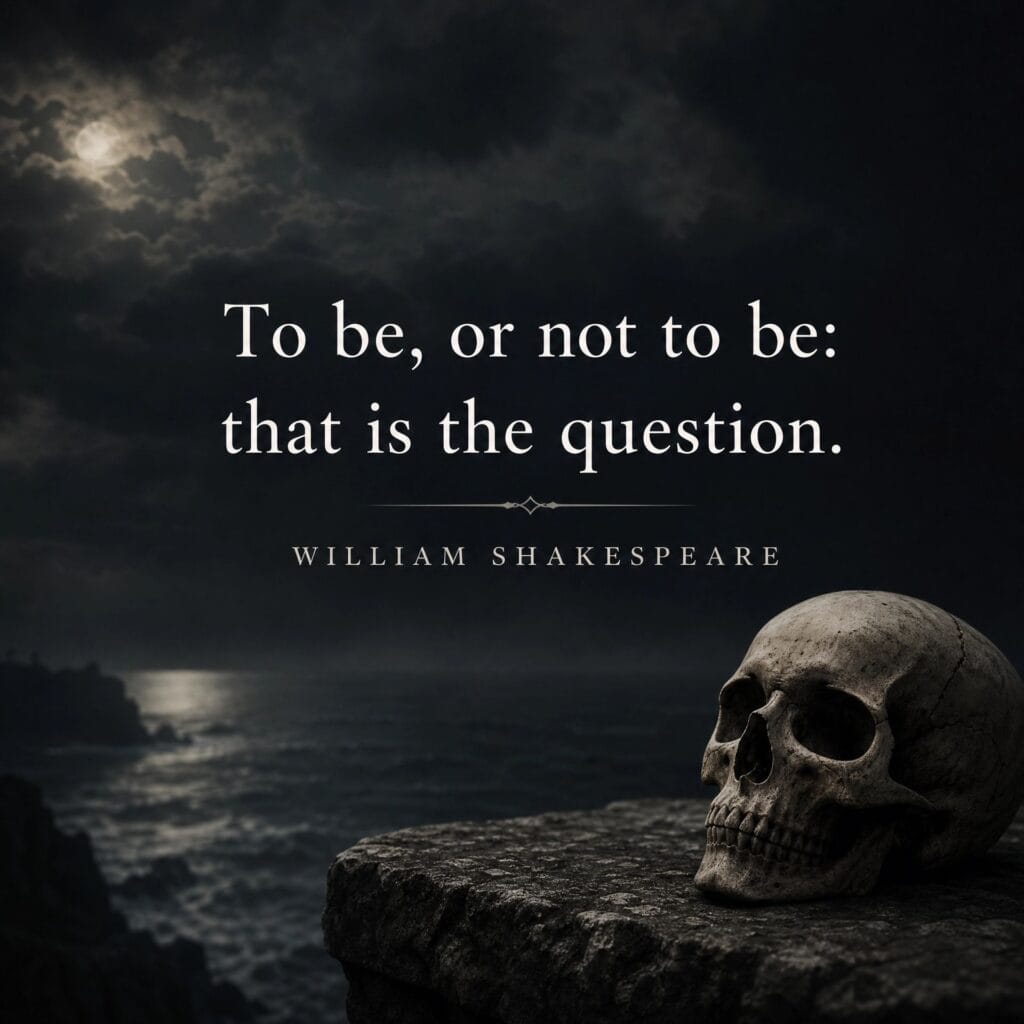
The line “To be, or not to be: that is the question.” comes from Hamlet by William Shakespeare. It is perhaps the most famous line in all of English literature, introducing Hamlet’s profound meditation on life, death, and the burden of human existence.
At its core, the question asks whether it is better to continue enduring life’s hardships or to escape them through death. Hamlet is not merely contemplating existence itself—he is wrestling with suffering, uncertainty, and the fear of the unknown. The soliloquy captures the inner conflict between the desire to end pain and the instinct to keep living despite it.
In the context of the play, Hamlet is overwhelmed by grief over his father’s death, disturbed by his mother’s remarriage, and consumed by the duty to avenge his father’s murder. Torn between action and hesitation, he turns inward, questioning the value and purpose of life itself.
Philosophically, the line explores one of humanity’s oldest questions: What makes life worth living? Shakespeare does not provide a simple answer. Instead, he portrays the complexity of human thought, showing how hope, fear, reason, and uncertainty exist side by side within the same mind.
Psychologically, Hamlet’s soliloquy reveals the weight of overthinking. His intellect allows him to see every possibility and every consequence, making decisive action almost impossible. Shakespeare suggests that the greatest battles are often fought not in the outside world, but within the human mind.
The enduring power of the line lies in its universality. Every generation has faced moments of doubt, uncertainty, and difficult choices. Hamlet’s question continues to resonate because it speaks to the shared human experience of searching for meaning in the face of life’s challenges.
In conclusion, “To be, or not to be: that is the question.” is far more than an opening line to a soliloquy. It is Shakespeare’s timeless exploration of existence, reminding us that the search for meaning, courage, and purpose is one of the defining experiences of being human.