The Secret Life of Books Hidden stories. Untold truths. Every book
Banned Book Spotlight: Maus by Art Spiegelman
Why the Book Still Matters Today
Few books have changed the way people think about history, memory, and graphic storytelling as profoundly as Maus. First published in complete form in 1991, it tells the true story of the Holocaust through the experiences of the author’s father, a survivor of Nazi persecution.
At a time when misinformation, historical denial, and political extremism continue to threaten public understanding, Maus serves as a powerful reminder of the human cost of hatred and intolerance. The book demonstrates that history is not just a collection of dates and events—it is a collection of lived experiences that must be remembered.
Its impact extends beyond Holocaust literature. Maus helped establish graphic novels as a serious literary form capable of addressing the most complex and painful subjects.
Content and Themes
Maus combines biography, memoir, history, and graphic storytelling to recount the experiences of Vladek Spiegelman during the Holocaust.
Key themes include:
- The horrors of the Holocaust – The systematic persecution and murder of millions under Nazi rule.
- Memory and trauma – How survivors carry the psychological scars of historical tragedy.
- Family relationships – The complicated bond between Art Spiegelman and his father.
- Survival and resilience – The difficult choices people make in order to stay alive.
- Prejudice and dehumanization – The dangers of reducing people to stereotypes and categories.
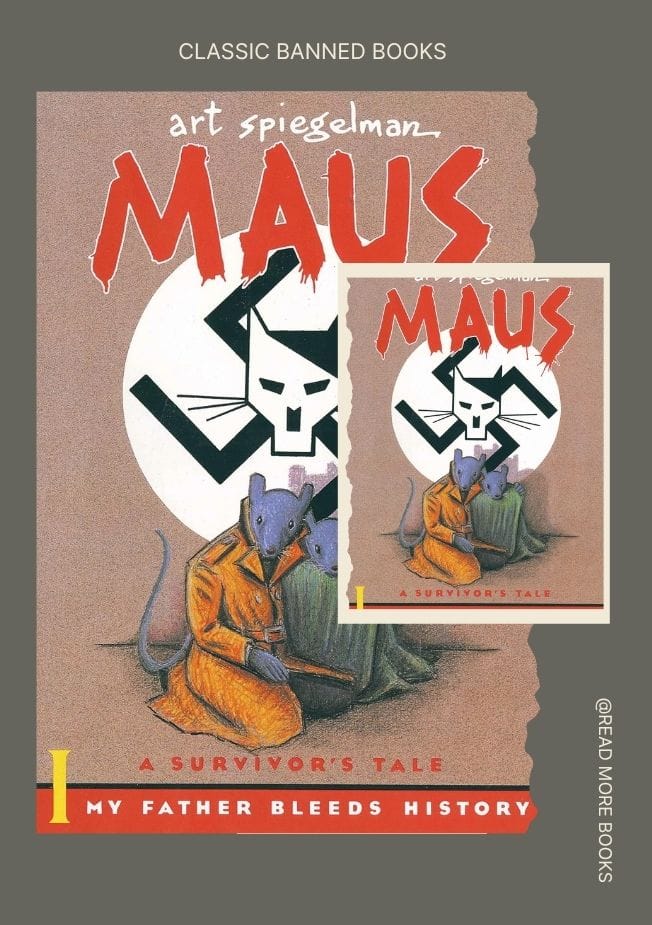
The book famously portrays different groups as animals: Jews as mice, Germans as cats, and Poles as pigs. This artistic choice highlights how societies create divisions between people while emphasizing the absurdity of racial classifications.
About the Author: Art Spiegelman
Art Spiegelman (born 1948) is an American cartoonist, editor, and graphic novelist widely regarded as one of the pioneers of modern graphic literature.
The son of Holocaust survivors, Spiegelman spent years interviewing his father and transforming those conversations into Maus. His innovative blend of personal memoir and historical documentation challenged assumptions about what comics could accomplish.
In 1992, Maus became the first graphic novel to receive a Pulitzer Prize Special Award, helping elevate graphic novels to a respected place within contemporary literature.
Why Maus Was Banned
The book has faced challenges and removals in schools and libraries for several reasons:
- Depictions of violence related to the Holocaust
- Strong language
- Brief nudity in illustrations
- Mature themes involving genocide, suicide, and trauma
- Concerns about age appropriateness
Supporters of the book argue that these elements are essential to honestly portraying one of history’s greatest atrocities. They contend that removing or sanitizing such material risks diminishing understanding of the Holocaust and its lessons.
One of the most widely publicized controversies occurred in 2022 when a school board in Tennessee removed the book from its curriculum, sparking international debate about censorship, education, and historical memory.
Final Thought
Maus was challenged not because it glorifies violence or hatred, but because it confronts readers with uncomfortable truths.
It forces us to witness the consequences of prejudice, authoritarianism, and indifference. Through simple black-and-white drawings, Spiegelman achieves something remarkable: he makes history feel immediate, personal, and impossible to ignore.
Reading Maus today is more than reading a graphic novel. It is an act of remembering—and a reminder that the lessons of history remain as important as ever.