The Secret Life of Books Hidden stories. Untold truths. Every book
Banned Book Spotlight: Howl by Allen Ginsberg
Why the Book Still Matters Today
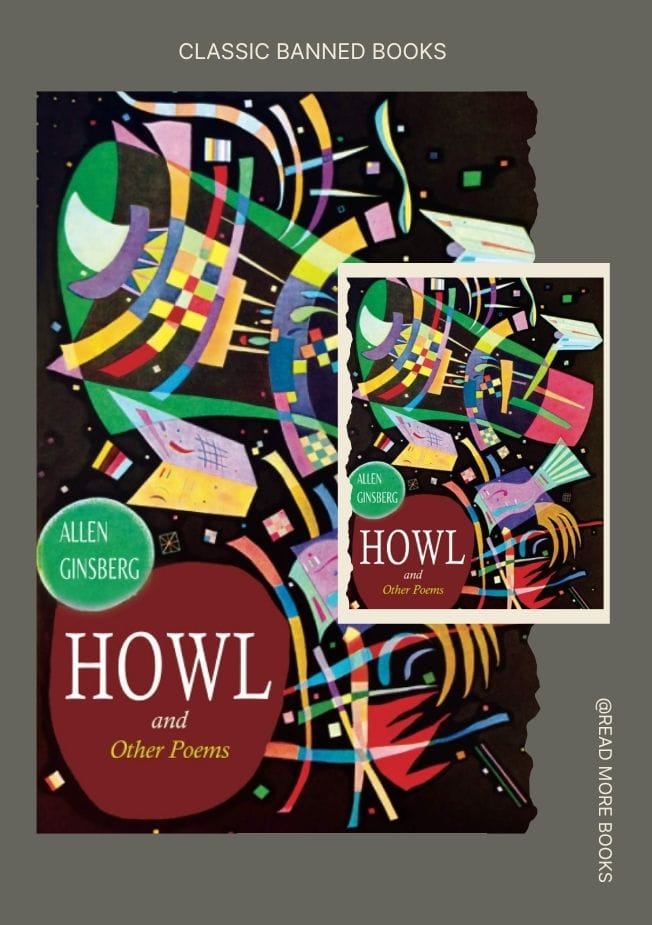
First published in 1956, Howl is one of the most influential poems of the 20th century and a defining voice of the Beat Generation. Written in postwar United States, it captures a raw, urgent cry against conformity, war, consumerism, and emotional repression.
Even today, the poem remains powerful because it gives language to anger, alienation, and the struggle to find meaning in a rapidly changing modern world.
Content and Themes
Beneath its free verse structure lies intense social and emotional critique:
Rebellion against conformity – A rejection of rigid societal expectations.
Mental anguish and alienation – Voices of individuals struggling with isolation and trauma.
Freedom and expression – Art as a form of resistance and survival.
Urban modern life – A chaotic portrayal of cities and industrial culture.
Sexuality and identity – Open exploration of taboo and marginalized experiences.
Its rhythmic, chaotic style mirrors the intensity of its message.
About the Author: Allen Ginsberg
Allen Ginsberg was an American poet and a central figure of the Beat Generation. His work challenged censorship, political authority, and traditional poetic form. He became a symbol of free expression and countercultural literature.
Howl remains his most iconic and controversial work.
Why Howl Was Banned or Challenged
The poem became the center of a landmark obscenity trial due to:
Explicit sexual language – Direct and graphic references to sexuality.
Drug use references – Depictions of substance use in Beat culture.
Anti-establishment themes – Criticism of government, capitalism, and social norms.
Moral and cultural shock – Considered highly provocative in the 1950s.
The eventual court ruling in its favor became a milestone for free speech in literature.
Final Thought
Howl was challenged not because it lacked meaning—but because it refused silence. It transformed personal pain and social anger into poetry that demanded to be heard.