The Secret Life of Books Hidden stories. Untold truths. Every book
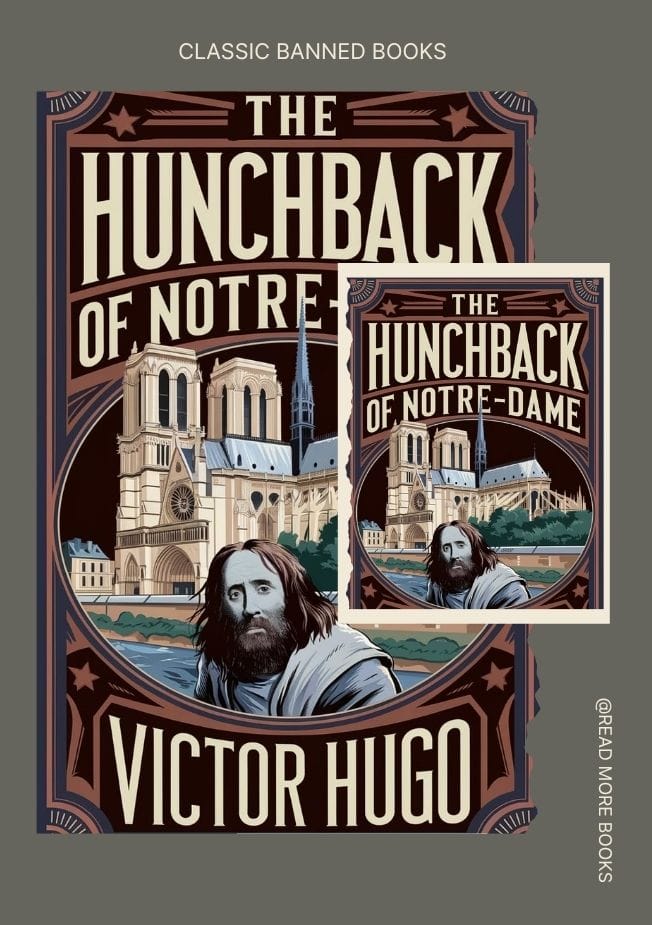
Banned Book Spotlight: The Hunchback of Notre-Dame by Victor Hugo
Why the Book Still Matters Today
Published in 1831, The Hunchback of Notre-Dame is a powerful historical novel set in medieval France, centered around the famous cathedral of Notre-Dame in Paris. It follows Quasimodo, Esmeralda, and others whose lives intersect in a story of beauty, cruelty, love, and injustice.
Even today, the novel remains relevant because it explores how society treats those who are different—and how power, prejudice, and appearance can shape a person’s fate.
Content and Themes
Behind its dramatic plot lies deep social and philosophical meaning:
Beauty vs. ugliness – True goodness is contrasted with physical appearance.
Social injustice – The poor and marginalized suffer under rigid systems.
Fate and destiny – Characters are trapped by circumstance and society.
Love and sacrifice – Deep emotional bonds drive tragic decisions.
Religious and institutional power – The Church and society influence justice and morality.
Its emotional intensity makes it both tragic and thought-provoking.
About the Author: Victor Hugo
Victor Hugo was a French novelist, poet, and political thinker known for his passionate defense of human rights and social justice. His works often highlight inequality and the dignity of the marginalized.
The Hunchback of Notre-Dame helped establish his reputation as a major literary voice of Romanticism.
Why The Hunchback of Notre-Dame Was Banned or Challenged
While not widely banned in the modern sense, it faced criticism and restrictions in some periods due to:
Religious criticism – Its portrayal of the Church and clergy.
Violence and dark themes – Depictions of cruelty, suffering, and death.
Moral concerns – Some viewed its emotional and tragic content as unsettling.
Challenge to authority – Its sympathy for marginalized characters questioned social structures.
Its realism and critique of institutions made it controversial in certain contexts.
Final Thought
The Hunchback of Notre-Dame was not written to glorify beauty—but to question it. It reminds us that society often judges by appearance, while truth lies much deeper.