The Secret Life of Books Hidden stories. Untold truths. Every book
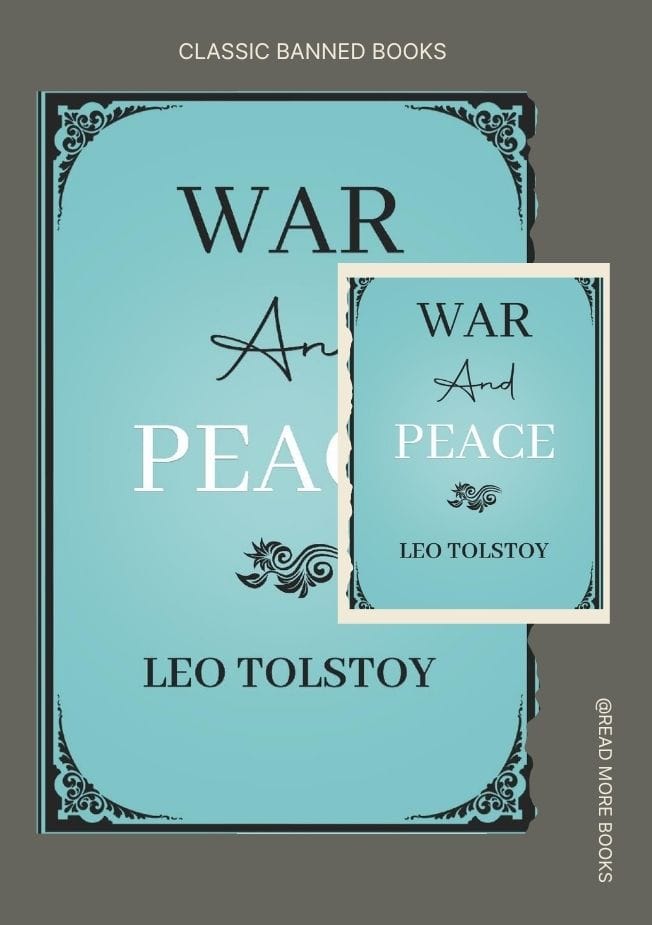
Banned Book Spotlight: War and Peace by Leo Tolstoy
Why the Book Still Matters Today
Published between 1865 and 1869, War and Peace is one of the greatest epic novels in world literature. Set during the Napoleonic era in the Russian Empire, it follows multiple aristocratic families as they experience love, loss, war, and philosophical transformation across turbulent history in Russia.
Even today, the novel remains deeply relevant because it explores how large historical forces shape individual lives—and how personal choices still matter within overwhelming systems.
Content and Themes
Beneath its vast scale lies profound philosophical insight:
War and human suffering – The brutality and chaos of conflict are central to the narrative.
Fate vs. free will – Characters struggle between destiny and personal choice.
Search for meaning – Philosophical reflections on purpose, faith, and existence.
Love and transformation – Personal relationships evolve amid historical upheaval.
History as a force – Tolstoy questions who truly controls historical events.
Its structure blends storytelling with deep philosophical reflection.
About the Author: Leo Tolstoy
Leo Tolstoy was a Russian writer and philosopher, widely regarded as one of the greatest novelists of all time. His works often explore morality, spirituality, and the human condition with extraordinary depth.
War and Peace is his most ambitious work, combining fiction with historical and philosophical analysis.
Why War and Peace Was Banned or Challenged
Although not widely banned in the modern sense, it faced resistance in some contexts due to:
Political themes – Reflections on war, power, and leadership.
Philosophical and religious questioning – Deep exploration of faith and existence.
Length and complexity – Considered difficult and challenging for readers.
Critique of authority – Subtle questioning of historical narratives and elites.
Its intellectual depth made it less accessible in certain educational systems.
Final Thought
War and Peace was not written simply as a historical novel—it was written as a meditation on life itself. It shows that history is not only made by leaders, but also shaped by countless ordinary human decisions.