The Secret Life of Books Hidden stories. Untold truths. Every book
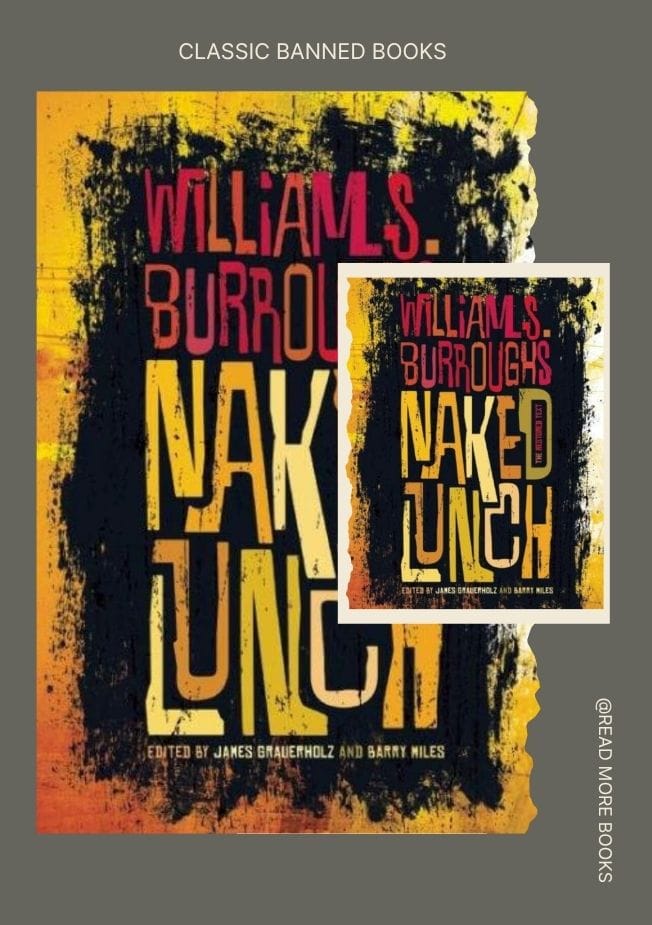
Banned Book Spotlight: Naked Lunch by William S. Burroughs
Why the Book Still Matters Today
Published in 1959, Naked Lunch is one of the most controversial and experimental novels of the 20th century. Rather than following a traditional plot, it is a fragmented, hallucinatory journey through addiction, control, and distorted reality. The narrative shifts between cities like New York, United States, and surreal imagined spaces that reflect the psychological chaos of dependency.
Even today, the novel remains significant because it pushes literature to its limits—questioning not only society, but also language, identity, and perception itself.
Content and Themes
Beneath its nonlinear structure lies a harsh critique of modern life:
Addiction and dependency – The novel explores the physical and psychological grip of substance use.
Control and surveillance – Systems of authority appear in distorted, oppressive forms.
Reality vs. hallucination – The boundary between what is real and imagined constantly breaks down.
Body and identity – Human identity is shown as unstable and fragmented.
Language as disruption – Traditional storytelling is dismantled into disjointed fragments.
Its structure reflects the instability it describes.
About the Author: William S. Burroughs
William S. Burroughs was an American writer and a central figure of the Beat Generation. His work is known for experimental techniques like “cut-up” writing and for exploring themes of control, addiction, and societal systems of power.
Naked Lunch remains his most famous and debated work.
Why Naked Lunch Was Banned or Challenged
The novel faced major legal and cultural battles due to:
Explicit drug use content – Graphic depiction of addiction and substance culture.
Sexual and disturbing imagery – Highly controversial material for its time.
Obscenity charges – Banned in several countries, including legal cases in the U.S.
Non-linear, fragmented structure – Seen as chaotic and subversive to traditional literature.
It became a landmark case in literary censorship history.
Final Thought
Naked Lunch was challenged not because it tells a simple story—but because it refuses storytelling conventions entirely. It confronts readers with disorientation, forcing them to question how reality is constructed.