The Secret Life of Books Hidden stories. Untold truths. Every book
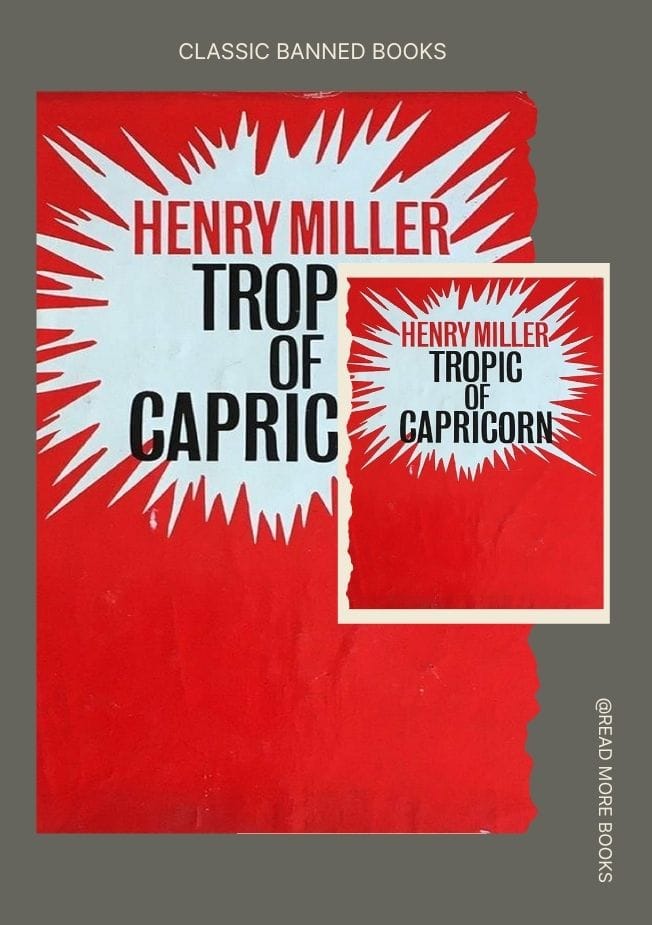
Banned Book Spotlight: Tropic of Capricorn by Henry Miller
Why the Book Still Matters Today
Published in 1939, Tropic of Capricorn is a semi-autobiographical novel that explores the early life of Henry Miller in United States before his years in Paris. It paints a raw, often unsettling picture of industrial society, personal struggle, and the formation of an artist’s voice.
Even today, the novel remains significant because it exposes the emotional and social constraints that shape identity—and the rebellion required to break free from them.
Content and Themes
Beneath its fragmented and intense narrative lies deep reflection:
Rebellion against society – The novel rejects conventional expectations of work, family, and success.
Identity and self-creation – The narrator’s life is shaped by internal resistance and transformation.
Alienation in modern life – Industrial America is portrayed as emotionally and spiritually draining.
Sexuality and instinct – Human desire is presented as natural but often repressed.
Art and survival – Writing becomes a means of escaping and redefining reality.
Its style is deliberately chaotic, reflecting inner turmoil.
About the Author: Henry Miller
Henry Miller was an American writer known for his autobiographical, provocative, and experimental works. His writing often challenged censorship, moral conventions, and literary form, focusing instead on raw human experience.
Tropic of Capricorn serves as a companion to Tropic of Cancer, continuing his exploration of personal freedom and artistic rebellion.
Why Tropic of Capricorn Was Banned or Challenged
The book has faced bans and controversy due to:
Explicit sexual content – Open and detailed discussion of sexuality.
Rejection of social norms – Critique of work culture and traditional values.
Obscenity concerns – Banned in multiple countries for its time.
Unconventional structure and language – Considered provocative and disorderly.
Like its counterpart, it played a role in redefining literary censorship debates.
Final Thought
Tropic of Capricorn was not written to comfort—it was written to confront. It challenges the systems that shape identity and asks what remains when social expectations are stripped away.