The Secret Life of Books Hidden stories. Untold truths. Every book
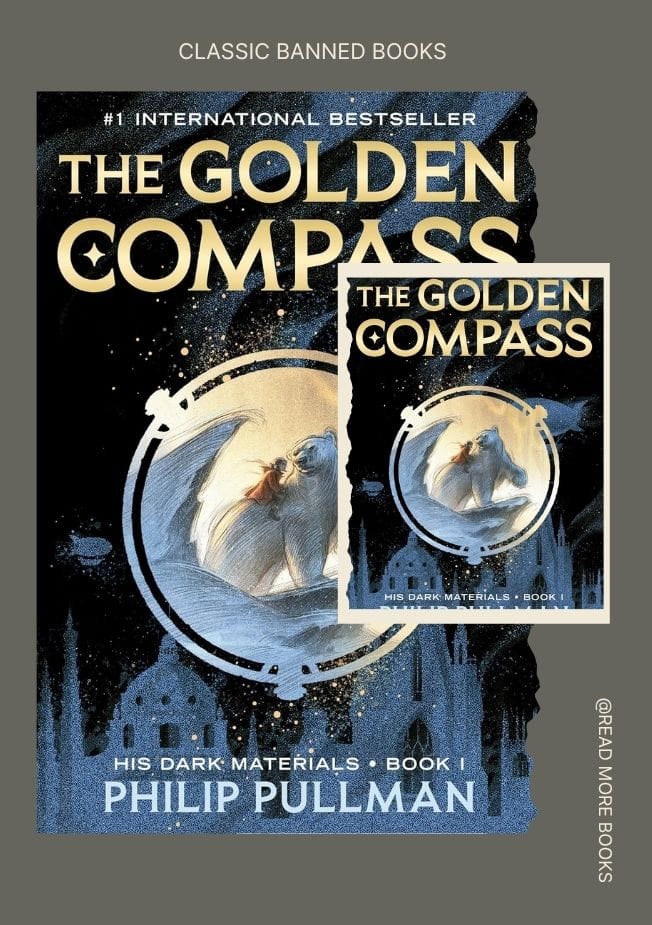
Banned Book Spotlight: The Golden Compass by Philip Pullman
Why the Book Still Matters Today
Published in 1995, The Golden Compass (the first book in His Dark Materials) introduces readers to a richly imagined parallel world where souls take the form of animal companions and powerful institutions control knowledge and belief.
Even today, the novel feels strikingly relevant. In a time where information, authority, and personal freedom are constantly debated, the story challenges readers to think critically and question what they are told.
Content and Themes
Beneath its adventurous narrative lies deep philosophical inquiry:
Authority vs. freedom – The novel questions institutions that control truth and thought.
Curiosity and knowledge – Lyra’s journey is driven by a desire to understand the unknown.
Innocence and experience – Childhood is portrayed as both vulnerable and powerful.
Soul and identity – The concept of dæmons reflects inner self and consciousness.
Courage and moral choice – Characters must act despite uncertainty and fear.
Its fantasy framework allows complex ideas to unfold in a compelling way.
About the Author: Philip Pullman
Philip Pullman is a British author known for weaving philosophical themes into imaginative storytelling. His work often challenges traditional authority and encourages readers to explore ideas about truth, morality, and belief.
With The Golden Compass, he began a series that would become one of the most discussed and debated in modern literature.
Why The Golden Compass Was Banned or Challenged
The book has faced bans and criticism in some schools and communities due to:
Religious controversy – Perceived criticism of organized religion.
Philosophical themes – Questions about authority, faith, and truth.
Dark elements – Scenes involving danger, control, and experimentation.
Encouraging independent thought – Seen as controversial in certain contexts.
Many objections stem from its bold ideas rather than its storytelling.
Final Thought
The Golden Compass was challenged not because it confuses—but because it clarifies. It reveals how power can shape truth, and how questioning becomes the first step toward freedom.
Reading it today is more than entering a fantasy world—it is an invitation to think independently, to question deeply, and to follow truth wherever it leads.