The Secret Life of Books Hidden stories. Untold truths. Every book
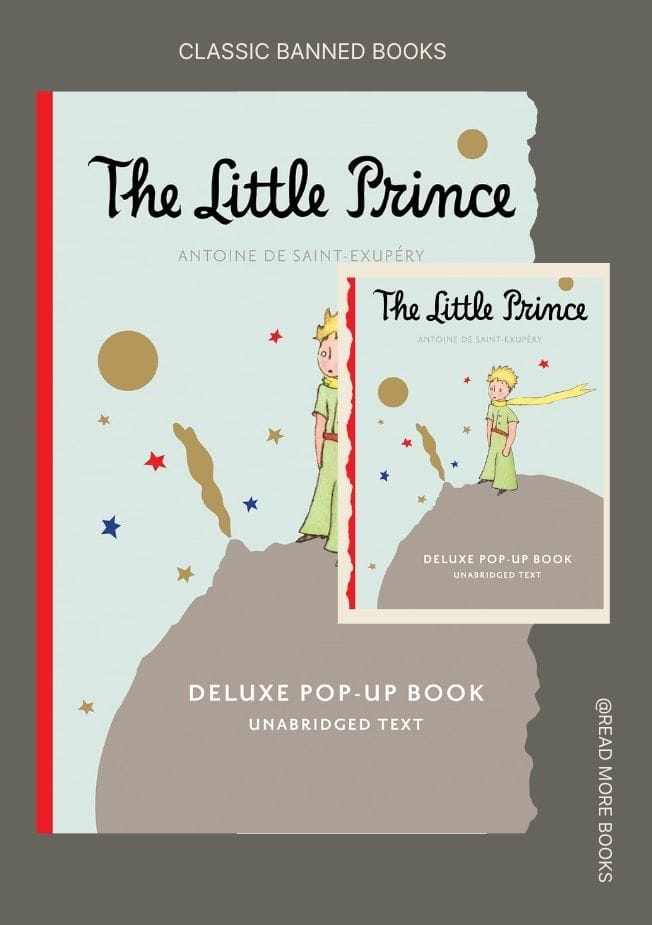
Banned Book Spotlight: The Little Prince by Antoine de Saint-Exupéry
Why the Book Still Matters Today
Published in 1943, The Little Prince is a deceptively simple story that reads like a children’s tale but carries the weight of philosophy, grief, and human longing. Written during World War II while its author was in exile in France / abroad, it follows a pilot stranded in the desert who meets a young prince traveling between planets, questioning life, love, and human behavior.
Even today, the book remains deeply relevant because it gently exposes how adults lose sight of what truly matters—and how imagination, empathy, and love are often the first things forgotten.
✦ Content and Themes
Behind its soft, poetic language lies profound meaning:
Childhood vs. adulthood – Adults are shown as overly logical, distracted, and disconnected from wonder.
Love and responsibility – The prince’s rose symbolizes emotional attachment and care.
Loneliness and connection – Characters across planets reflect different forms of isolation.
Meaning beyond appearance – “What is essential is invisible to the eye.”
Loss and grief – The story carries a quiet sense of farewell and longing.
Its simplicity hides a deeply philosophical reflection on human life.
About the Author: Antoine de Saint-Exupéry
Antoine de Saint-Exupéry was a French writer and aviator whose experiences in flight shaped his writing style and themes. His works often explore solitude, perspective, and the fragile beauty of human connection.
The Little Prince became his most famous work, translated into hundreds of languages and read across generations.
Why The Little Prince Was Banned or Challenged
While not widely banned in the traditional sense, it has faced challenges in some contexts due to:
Philosophical and symbolic interpretation – Its abstract meaning can be difficult for some readers.
Religious and ideological readings – Different interpretations of its spiritual undertones.
Perceived simplicity vs. depth – Misunderstanding it as “too childish” for serious study.
Educational suitability debates – Questions about age-appropriate comprehension.
Most controversy comes from interpretation rather than content.
Final Thought
The Little Prince was never just a story about a child—it is a quiet reminder of what adulthood often forgets. It suggests that understanding life is not about collecting facts, but about seeing with the heart.