The Secret Life of Books Hidden stories. Untold truths. Every book
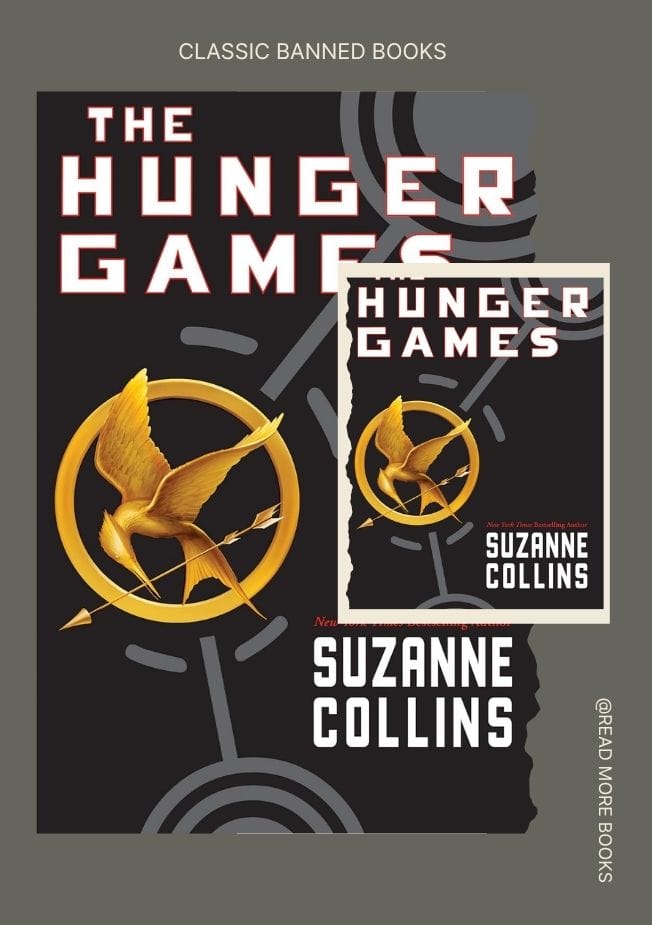
Banned Book Spotlight: The Hunger Games by Suzanne Collins
Why the Book Still Matters Today
Published in 2008, The Hunger Games is a dystopian novel set in the fictional nation of Panem, a society built on extreme inequality and control. Each year, children are forced into a televised fight for survival, turning violence into entertainment.
Even today, the story feels disturbingly relevant. In a world shaped by media influence, political division, and social inequality, it raises urgent questions about power, spectacle, and what societies are willing to accept as “normal.”
Content and Themes
Beneath its action-driven plot lies sharp social commentary:
Survival and sacrifice – Katniss Everdeen becomes a symbol of resistance and resilience.
Media and manipulation – The Games are designed to entertain and control public perception.
Power and oppression – The Capitol maintains control through fear and inequality.
Identity and resistance – Characters struggle between survival and moral choice.
Class inequality – The divide between districts highlights systemic injustice.
Its fast-paced story carries serious ethical questions.
About the Author: Suzanne Collins
Suzanne Collins is an American author known for writing young adult dystopian fiction. Before The Hunger Games, she worked in television, which influenced her understanding of media, storytelling, and audience impact.
Her trilogy became one of the most influential modern YA series, shaping both literature and film culture.
Why The Hunger Games Was Banned or Challenged
The book has been frequently challenged due to:
Violence involving children – The central concept of teens forced to fight to death.
Graphic and disturbing themes – Emotional and physical brutality in the Games.
Political and social criticism – Perceived commentary on government control and inequality.
Age appropriateness concerns – Debate over suitability for younger readers.
Most challenges arise from its intense subject matter rather than its message.
Final Thought
The Hunger Games was not written to glorify violence—it was written to question the systems that normalize it. It shows how societies can become desensitized when suffering is turned into spectacle.