The Secret Life of Books Hidden stories. Untold truths. Every book
Banned Book Spotlight: Midnight’s Children by Salman Rushdie
Why the Book Still Matters Today
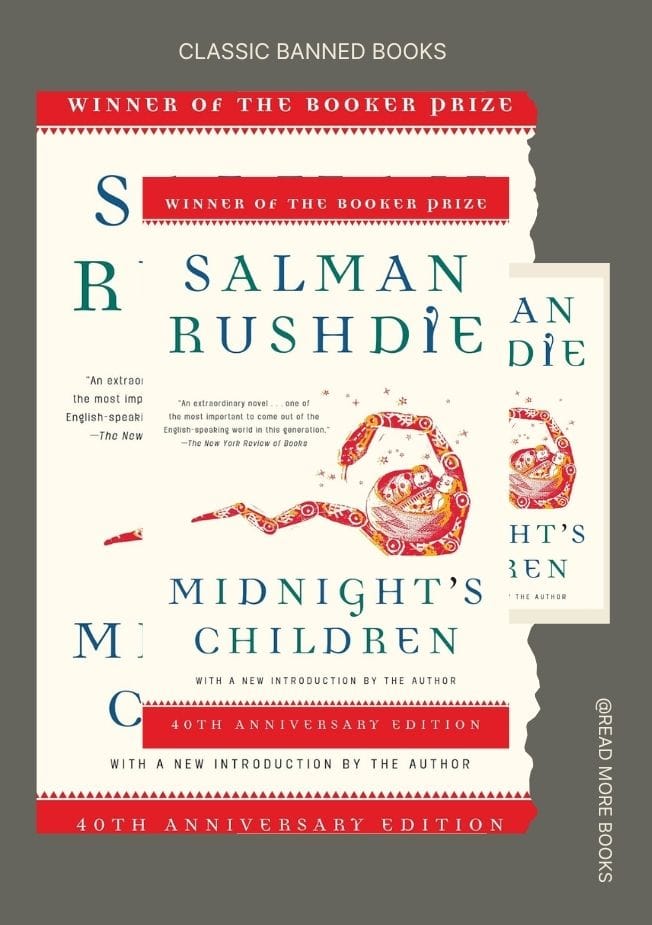
Published in 1981, Midnight’s Children is a landmark novel that blends history, magic, and personal narrative to tell the story of a nation and its people. Set during and after the Partition of India in India, the novel follows Saleem Sinai, born at the exact moment of independence, whose life becomes intertwined with the fate of the country.
Even today, the book remains deeply relevant as it explores identity, nationhood, memory, and the lasting impact of political decisions on individual lives.
Content and Themes
Behind its magical realism lies powerful historical and emotional depth:
History and identity – Personal lives are shaped by national events.
Magic and reality – Supernatural elements reflect deeper truths about society.
Memory and storytelling – The narrative questions how history is remembered and told.
Nationhood and division – The impact of independence and partition on identity.
Power and politics – Political forces influence personal destinies.
Its layered storytelling challenges readers to see history as both fact and narrative.
About the Author: Salman Rushdie
Salman Rushdie is a British-Indian novelist known for his use of magical realism and his bold engagement with political and cultural themes. His works often explore identity, migration, and the intersection of history and imagination.
Midnight’s Children won the Booker Prize and is considered one of the most important postcolonial novels.
Why Midnight’s Children Was Banned or Challenged
The novel has faced challenges and controversies due to:
Political sensitivity – Its portrayal of historical figures and events.
Criticism of leadership – Depictions of political leaders led to legal disputes.
Complex narrative style – Its unconventional storytelling challenged traditional expectations.
Cultural and national identity debates – Interpretations of history sparked controversy.
Much of the debate stems from its bold reimagining of historical reality.
Final Thought
Midnight’s Children was not challenged because it distorts history—but because it reinterprets it. It reminds us that history is not just a record of events, but a collection of stories shaped by memory, perspective, and power.