The Secret Life of Books Hidden stories. Untold truths. Every book
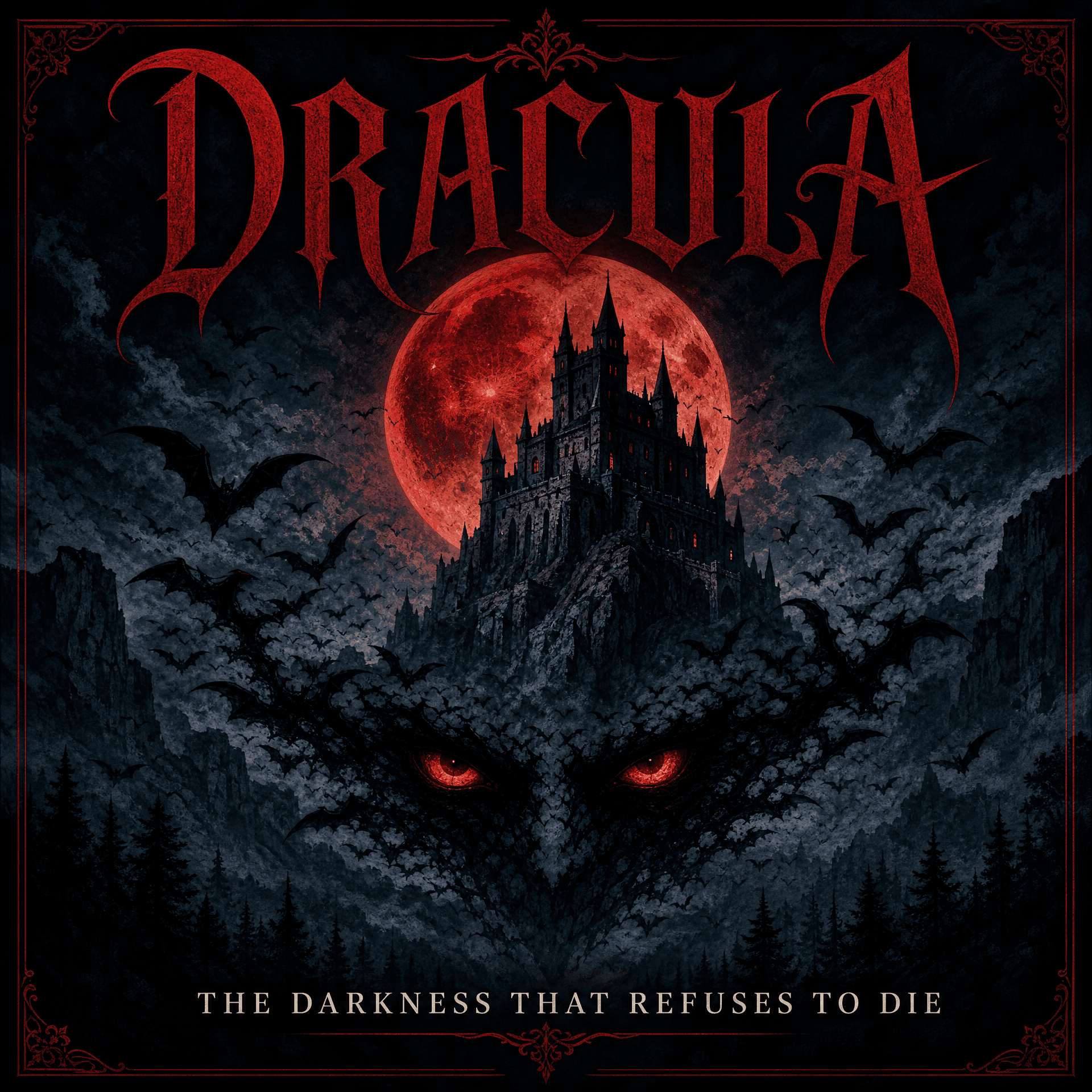
Dracula: The Darkness That Refuses to Die
The final years of the nineteenth century were filled with both excitement and anxiety. The world seemed to be transforming faster than ever before. Railways connected distant cities, telegraphs carried messages across continents, and scientific discoveries promised to unlock the mysteries of nature. Europe stood on the threshold of a modern age, confident in its progress and power.
Yet beneath that confidence lurked a quieter fear.
What if all the advances of civilization could not protect humanity from the darkness that had always existed? What if ancient nightmares still waited beyond the reach of reason?
These questions haunted the imagination of the Victorian era, and few writers captured them more vividly than Bram Stoker. Living in a world increasingly devoted to science and logic, Stoker became fascinated by older fears—legends whispered in remote villages, stories of creatures that walked between life and death, and the unsettling possibility that some mysteries could never be fully explained.
From those fears emerged Dracula, a novel that would forever change the landscape of horror literature.
The story begins with a journey eastward, away from the familiar comforts of modern Europe and into the shadowy mountains of Transylvania.
A young English solicitor named Jonathan Harker travels there on business. His task seems simple enough: assist a foreign nobleman with a property transaction in England.
But as Harker’s carriage climbs deeper into the Carpathian Mountains, the atmosphere begins to change.
The roads grow lonely. Villagers make fearful signs of the cross when they hear the name of his host. Wolves howl in the distance. Ancient superstitions cling to the landscape like mist.
Then, at last, he arrives at Castle Dracula.
The castle rises from the mountains like a monument to forgotten centuries. Its walls are immense, its corridors silent, its rooms filled with strange shadows. There he meets Count Dracula—a courteous, intelligent aristocrat whose manners conceal something profoundly unnatural.
At first, Dracula appears merely eccentric. But little by little, unsettling details emerge.
He casts no reflection.
He never seems to eat.
He appears strangely fascinated by blood.
Soon Jonathan realizes a terrifying truth. He is not a guest in the castle.
He is a prisoner.
What follows feels like a descent into a nightmare. The castle becomes a labyrinth of fear. Doors remain locked. Strange figures move through the darkness. Every attempt to escape ends in failure.
Meanwhile, Dracula prepares for a journey of his own.
Leaving Transylvania behind, he travels toward England, carrying with him not only his physical presence but an ancient evil determined to spread itself into the modern world.
As the Count arrives in England, the novel expands beyond one man’s terror and becomes a battle for countless lives.
The first victim is Lucy Westenra, a young woman whose beauty and kindness make her beloved by everyone around her. At first, her illness appears mysterious. She grows pale. Her strength fades. Strange marks appear on her neck.
Doctors search desperately for answers.
Yet science struggles to explain what is happening.
Night after night, Lucy drifts closer to death while an unseen predator feeds upon her life.
Her gradual transformation becomes one of the most haunting passages in the novel. It is not merely her body that changes. Something deeper is being stolen from her.
The tragedy of Lucy reveals one of the novel’s central fears: the corruption of innocence.
But Dracula’s ambitions do not end there.
Soon his attention turns toward Mina Murray, Jonathan Harker’s fiancée. Intelligent, loyal, and compassionate, Mina possesses an inner strength that makes her one of the most memorable characters in Victorian literature.
As Dracula’s influence spreads, a small group of individuals unite against him. Among them stands Professor Abraham Van Helsing, a scholar whose knowledge bridges the worlds of science and folklore.
Van Helsing understands what others cannot accept.
The threat they face cannot be defeated by reason alone.
To confront Dracula, they must venture into territory where ancient beliefs and modern knowledge collide.
The resulting struggle feels epic in scope. It is not simply a hunt for a monster. It is a battle between opposing visions of existence itself.
At the heart of Dracula lies one of literature’s most fascinating villains.
Count Dracula is terrifying not because he is a mindless beast but because he is intelligent, patient, and deeply charismatic. He possesses immense power, yet what makes him truly frightening is his ability to exploit human weaknesses.
He understands fear.
He understands desire.
He understands temptation.
In many ways, Dracula represents humanity’s darkest impulses made immortal.
While other monsters destroy through brute force, Dracula corrupts. He enters lives quietly, turning love into obsession, trust into vulnerability, and desire into destruction.
Yet his character also reflects a deeper human fear.
Dracula cannot accept death.
He exists outside the natural cycle of life, desperately clinging to existence century after century. His immortality, which might initially seem enviable, gradually reveals itself as a curse.
What is eternal life worth if it requires endless predation? What remains of humanity when survival becomes the only purpose?
These questions elevate the novel beyond horror.
At its philosophical core, Dracula explores the conflict between civilization and chaos, reason and superstition, life and death.
The Victorian world believed strongly in progress. Science appeared capable of solving every problem. Yet Dracula emerges from the shadows as a reminder that some aspects of human existence resist easy explanation.
The novel also explores the nature of fear itself.
Fear often thrives in uncertainty. It grows strongest when people refuse to acknowledge uncomfortable truths. Again and again, the characters struggle because they cannot believe what they are seeing.
How often does this happen beyond fiction?
How often do people ignore dangers because they seem impossible?
How often do they reject truth because it challenges their understanding of the world?
As the story races toward its conclusion, the pursuit of Dracula becomes increasingly desperate. The hunters follow him across Europe, determined to stop him before his influence spreads further.
The final confrontation unfolds amid wild landscapes and fading daylight. Every sacrifice, every act of courage, and every moment of suffering leads toward this climactic encounter.
When Dracula is finally defeated, the victory feels hard-earned rather than triumphant.
The darkness has been overcome, but not without cost.
And perhaps that is the novel’s most enduring lesson.
Evil is rarely defeated through strength alone. It requires courage, unity, sacrifice, and an unwavering commitment to what is good.
More than a century after its publication, Dracula continues to captivate readers because its fears remain surprisingly familiar.
The modern world may no longer fear vampires lurking in castle towers, but people still confront forms of manipulation, obsession, exploitation, and hidden danger.
The masks have changed.
The darkness has not.
We still wrestle with questions about power, temptation, identity, and mortality. We still seek meaning in a world where certainty often feels fragile.
That is why Dracula survives generation after generation. It is not simply a story about a vampire. It is a story about humanity confronting what it fears most.
In the end, Bram Stoker’s masterpiece reminds us that darkness never disappears completely. It waits patiently in forgotten corners, hidden beneath confidence and certainty, ready to return whenever vigilance fades.
And perhaps that is the reason the Count still haunts our imagination today. For if monsters endure because they reflect our deepest fears, then what does it say about us that Dracula remains immortal long after his story ends?