The Secret Life of Books Hidden stories. Untold truths. Every book
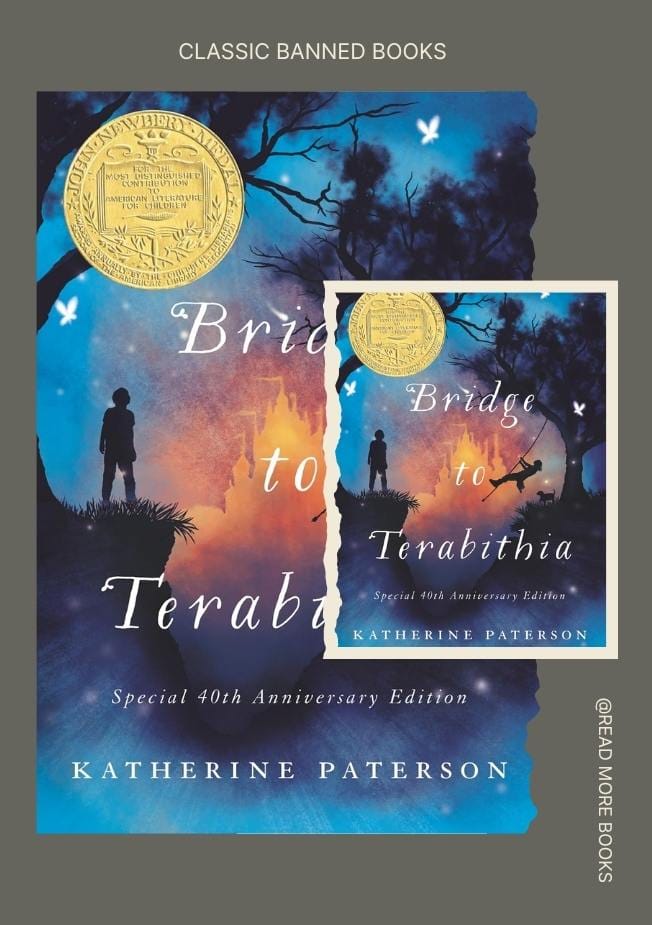
Banned Book Spotlight: Bridge to Terabithia by Katherine Paterson
Why the Book Still Matters Today
Published in 1977, Bridge to Terabithia is a quietly powerful story of friendship, imagination, and loss. Set in rural United States, it follows two children who create an imaginary kingdom as a refuge from loneliness and everyday struggles.
Even today, the novel resonates deeply with readers who understand how imagination can become both an escape and a way to process real emotions—especially grief, isolation, and growing up.
✦ Content and Themes
Behind its simple narrative lies profound emotional depth:
Friendship and connection – Jess and Leslie form a bond that transforms both their lives.
Imagination as escape – Terabithia becomes a safe world away from loneliness and pressure.
Grief and loss – The story confronts one of childhood’s hardest emotional realities.
Growing up too soon – Childhood innocence is challenged by unexpected tragedy.
Family expectations – Jess struggles with pressure, approval, and self-worth.
The novel gently shows that strength often grows from pain and understanding.
✦ About the Author: Katherine Paterson
Katherine Paterson is an award-winning American writer known for exploring deep emotional truths in children’s and young adult literature. Her work often focuses on empathy, loss, and human connection, written with simplicity that carries great emotional weight.
Bridge to Terabithia remains one of her most celebrated and impactful works.
✦ Why Bridge to Terabithia Was Banned or Challenged
The book has faced challenges in schools and libraries due to:
Depictions of death and grief – Some found its emotional impact too intense for young readers.
Religious concerns – Questions about fantasy and imagination were sometimes misinterpreted.
Use of language – A few instances of mild language in dialogue.
Emotional maturity of themes – Critics argued it was too heavy for children’s literature.
In many cases, it is not controversy—but emotional discomfort—that led to challenges.
✦ Final Thought
Bridge to Terabithia was not written to shock—it was written to heal. It reminds us that imagination can build worlds, but real life still shapes who we become.
Reading it today is more than revisiting a children’s classic—it is an experience of empathy, loss, and the fragile beauty of friendship that stays with us long after the story ends.