The Secret Life of Books Hidden stories. Untold truths. Every book
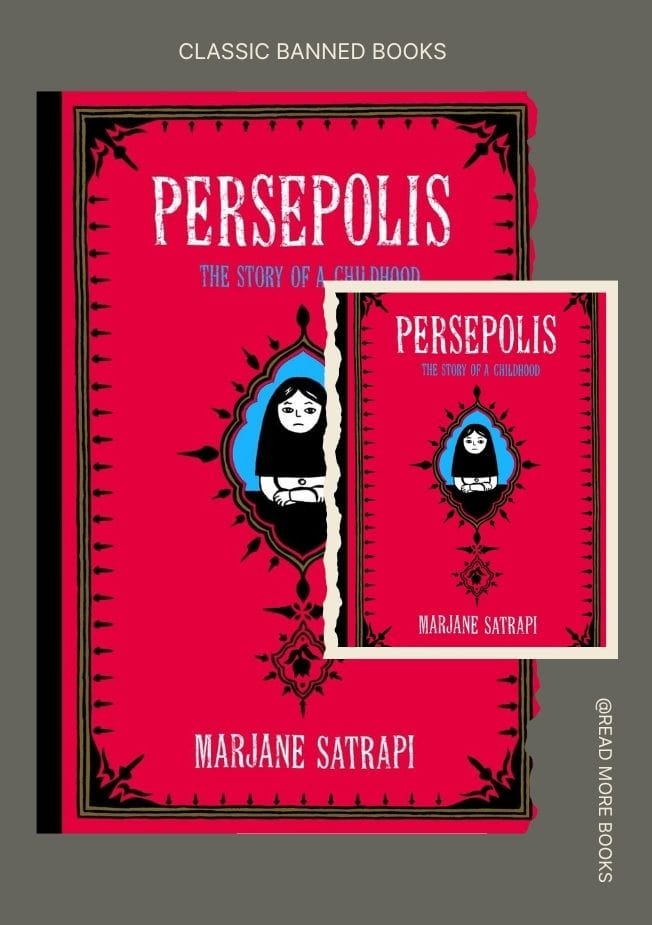
Banned Book Spotlight: Persepolis by Marjane Satrapi
Why the Book Still Matters Today
Published in 2000, Persepolis is a powerful graphic memoir set in Iran during and after the Islamic Revolution. Through the eyes of a young girl, the story captures what it means to grow up in a world shaped by war, ideology, and sudden loss of freedom.
In today’s climate of political unrest, identity struggles, and censorship, Persepolis feels strikingly relevant. It reminds readers that history is not just events—it is lived experience, especially for those whose voices are often unheard.
✦ Content and Themes
Despite its simple black-and-white illustrations, the novel carries deep and complex themes:
Coming-of-age in conflict – Marjane’s childhood is shaped by revolution, war, and exile.
Freedom vs. control – The imposition of strict rules highlights the loss of personal liberty.
Identity and belonging – Struggles between cultural roots and personal beliefs define her journey.
War through a child’s eyes – Innocence collides with harsh political realities.
Resistance and individuality – Small acts of defiance become powerful forms of self-expression.
Its unique format makes heavy themes accessible while intensifying their emotional impact.
✦ About the Author: Marjane Satrapi
Marjane Satrapi is an Iranian-born writer and artist who uses storytelling to explore memory, identity, and political history. With Persepolis, she brought global attention to Iran’s revolution—not through abstract narratives, but through personal truth and lived experience.
Her work bridges cultures, helping readers understand a complex society beyond stereotypes.
✦ Why Persepolis Was Banned
The book has faced bans and challenges in various schools and institutions due to:
Political content – Criticism of government and portrayal of revolution.
Religious sensitivity – Depictions that challenge strict interpretations of faith.
Graphic imagery – Scenes of war, torture, and execution, even in illustrated form.
Mature themes – Discussions of identity, rebellion, and personal freedom.
Authorities often restrict it because it encourages questioning—of power, ideology, and imposed narratives.
✦ Final Thought
Persepolis was challenged not because it is inappropriate—but because it is honest. It shows that even in the face of control and fear, the human spirit seeks freedom, identity, and truth.
Reading it today is more than exploring a memoir—it is an act of understanding, of breaking stereotypes, and of listening to a voice that refuses to be silenced.