The Secret Life of Books Hidden stories. Untold truths. Every book
The Real Meaning of Nietzsche’s Übermensch: Why Most People Get It Wrong
If there is one idea that has followed Friedrich Nietzsche through history, it is the concept of the Übermensch. The word has fascinated philosophers, writers, psychologists, and readers for more than a century. It has also been one of the most misunderstood ideas in modern philosophy.
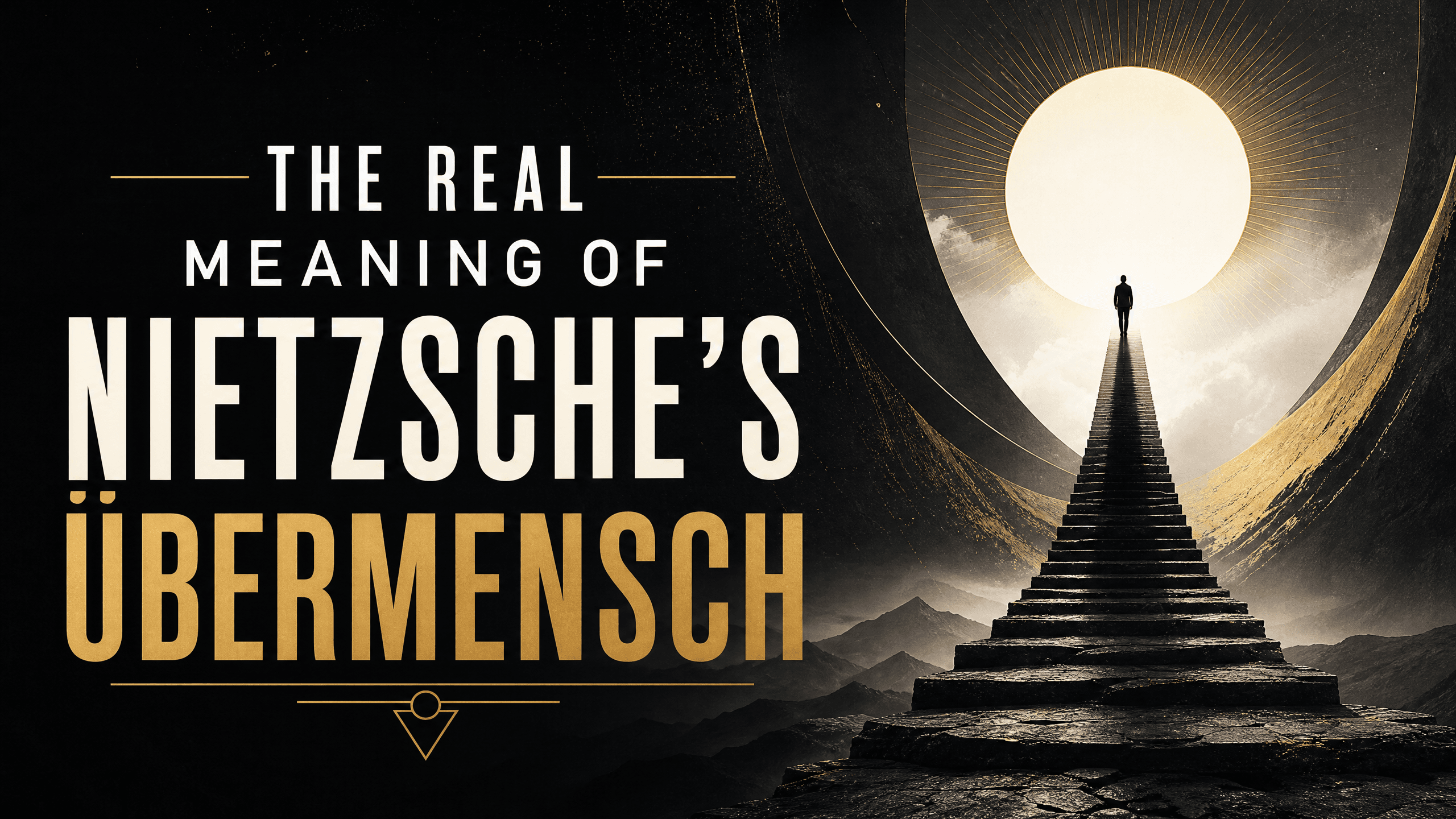
Many people hear the word and immediately think of a physically superior human being, a dictator, or even a comic-book superhero. Others assume Nietzsche was promoting the idea that some people are naturally better than others. These interpretations are common, but they miss the heart of what Nietzsche meant.
The truth is that the Übermensch meaning has very little to do with physical strength, race, or domination. Instead, it is about becoming the highest version of yourself through continuous self-overcoming, creative living, and the courage to create your own values.
In this article, we’ll explore the Nietzsche Übermensch explanation, examine the difference between the Superman and the Overman, understand its connection with God is Dead, Will to Power, and The Last Man, and discover why Nietzsche’s greatest philosophical idea still matters today.
What Does Übermensch Mean?
The German word Übermensch literally translates as “Overman” or “Beyond-Man.” Although early English translators used the word “Superman,” many modern scholars prefer “Overman” because it better captures Nietzsche’s intended meaning.
When people search for Übermensch meaning, they often expect a definition describing a superior human species. Nietzsche meant something entirely different.
The Übermensch is a person who constantly transforms himself.
Rather than accepting society’s beliefs without question, the Übermensch creates his own purpose. Instead of following inherited morality, he develops values through experience, reflection, and courage.
This is why the concept is fundamentally psychological and philosophical rather than biological.
Why Most People Get It Wrong
The misunderstanding comes from several sources.
1. The Translation “Superman”
One of the biggest reasons for confusion is the English translation.
“Superman” suggests someone with extraordinary powers or someone inherently superior to everyone else. The German word, however, emphasizes going beyond one’s present condition, not becoming an invincible hero.
2. Political Misuse
During the twentieth century, Nietzsche’s writings were selectively interpreted and sometimes deliberately distorted for political purposes.
Although his ideas were associated by some with notions of racial superiority, Nietzsche himself criticized nationalism, antisemitism, and blind obedience. Modern scholars generally reject the claim that the Übermensch supports authoritarian ideologies.
3. Pop Culture
Comic books and films have transformed the word “superman” into an image of physical perfection.
Nietzsche’s ideal is almost the opposite.
The Übermensch wins not by defeating others but by overcoming himself.
The Connection Between “God Is Dead” and the Übermensch
One cannot understand the Übermensch without first understanding Nietzsche’s famous declaration:
“God is dead.”
This statement is often misunderstood as a celebration of atheism.
It was actually a diagnosis of Western culture.
Nietzsche observed that traditional religious beliefs were losing their authority in modern society. Science, reason, and secular thinking had weakened the old foundations of morality.
The problem, however, was not simply the decline of religion.
The real question became:
If old values disappear, where will new values come from?
Nietzsche’s answer was the Übermensch.
The Übermensch creates meaning instead of waiting for society, religion, or tradition to provide it.
Self-Overcoming: The Heart of the Übermensch
If one phrase summarizes Nietzsche’s philosophy, it is self-overcoming.
The Übermensch is not someone who has reached perfection.
Instead, he is someone who never stops growing.
He continuously questions:
What fears control me?
Which beliefs have I inherited without examination?
How can I become more authentic?
What strengths remain undeveloped?
Every challenge becomes an opportunity for transformation.
This process never ends.
The Übermensch is always becoming.
Will to Power: More Than the Desire to Rule
Another concept frequently misunderstood is Nietzsche’s Will to Power.
Many interpret it as political domination or the desire to control others.
Nietzsche’s idea is much deeper.
The Will to Power represents the inner drive to expand one’s abilities, express creativity, and realize one’s potential.
Artists creating masterpieces…
Scientists making discoveries…
Writers producing timeless literature…
Entrepreneurs building meaningful businesses…
All express the Will to Power by transforming possibility into reality.
For Nietzsche, genuine power begins with mastery over oneself.
The Last Man: The Opposite of the Übermensch
To understand the Übermensch fully, we must also understand The Last Man.
The Last Man represents comfort without purpose.
He avoids risks.
He seeks only security.
He prefers entertainment over growth.
He wants an easy life rather than a meaningful one.
Nietzsche feared that modern society was producing more Last Men than creators.
The Übermensch chooses uncertainty because growth requires struggle.
The Last Man chooses comfort because comfort demands nothing.
Nietzsche’s Three Stages of Transformation
In Thus Spoke Zarathustra, Nietzsche describes three symbolic transformations of the human spirit.
The Camel
The camel carries heavy burdens.
It represents obedience, duty, and accepting society’s expectations.
The Lion
The lion rebels.
It says “No” to imposed values.
Freedom begins here.
The Child
The child creates.
It says “Yes” to life.
This final stage symbolizes creativity, innocence, and the ability to build new values.
The Übermensch resembles the child—not because he is naïve, but because he possesses the freedom to create.
Nietzsche’s Übermensch in Everyday Life
Many assume the Übermensch belongs only to philosophy books.
In reality, Nietzsche’s idea can inspire ordinary life.
Someone practicing self-overcoming might:
Replace resentment with responsibility.
Develop discipline instead of seeking excuses.
Create meaningful work instead of chasing status.
Think independently rather than follow every trend.
Accept suffering as part of growth instead of avoiding discomfort.
The Übermensch is not perfect.
He simply refuses to stop becoming.
Common Myths About Nietzsche’s Übermensch
Myth 1: The Übermensch is a dictator.
False.
Nietzsche focused on self-mastery, not political domination.
Myth 2: It promotes racial superiority.
False.
Modern scholarship overwhelmingly rejects this interpretation.
Myth 3: The Übermensch has no morality.
False.
He creates values through responsibility rather than blindly accepting inherited rules.
Myth 4: Only geniuses can become the Übermensch.
False.
The idea is aspirational.
Anyone committed to lifelong self-overcoming participates in the journey.
Why the Übermensch Still Matters Today
Modern life offers endless distractions.
Social media rewards conformity.
Consumer culture encourages comfort.
Algorithms constantly tell us what to think.
Nietzsche’s philosophy asks a radically different question:
Who are you becoming?
Rather than comparing yourself with others, the Übermensch asks you to compare yourself with yesterday’s version of yourself.
That message feels remarkably relevant in the twenty-first century.
Personal development, resilience, creativity, authenticity, and lifelong learning all echo Nietzsche’s call for self-overcoming.
Final Thoughts
The real meaning of Nietzsche’s Übermensch has never been about becoming superior to other people. It is about becoming superior to your former self.
It is a philosophy of transformation rather than domination.
The Übermensch meaning is found in courage, creativity, discipline, and the willingness to create meaning even when life offers no easy answers.
Understanding the Nietzsche Übermensch explanation also reveals why concepts like God is Dead, Will to Power, Self-overcoming, and The Last Man are inseparable parts of the same philosophical vision.
Nietzsche challenges every generation with the same question:
Will you simply inherit your life, or will you create it?
Discover the real Übermensch meaning in Nietzsche’s philosophy. Learn the true Nietzsche Übermensch explanation, the difference between Superman and Overman, and how concepts like God is Dead, Will to Power, Self-overcoming, and The Last Man fit together.
FAQs
What is the Übermensch meaning?
The Übermensch is Nietzsche’s ideal of a person who continually transforms themselves through self-overcoming, creativity, and the creation of personal values.
What is the difference between Superman and Overman?
“Superman” is an older English translation of Übermensch, while “Overman” more accurately reflects Nietzsche’s idea of transcending one’s current self rather than possessing superhuman powers.
How is the Übermensch connected to “God is Dead”?
After traditional sources of meaning lose authority, the Übermensch responds by creating new values and purpose instead of relying on inherited beliefs.
What is the opposite of the Übermensch?
Nietzsche presents The Last Man as the opposite: someone who prioritizes comfort, security, and conformity over growth and self-transformation.