The Secret Life of Books Hidden stories. Untold truths. Every book
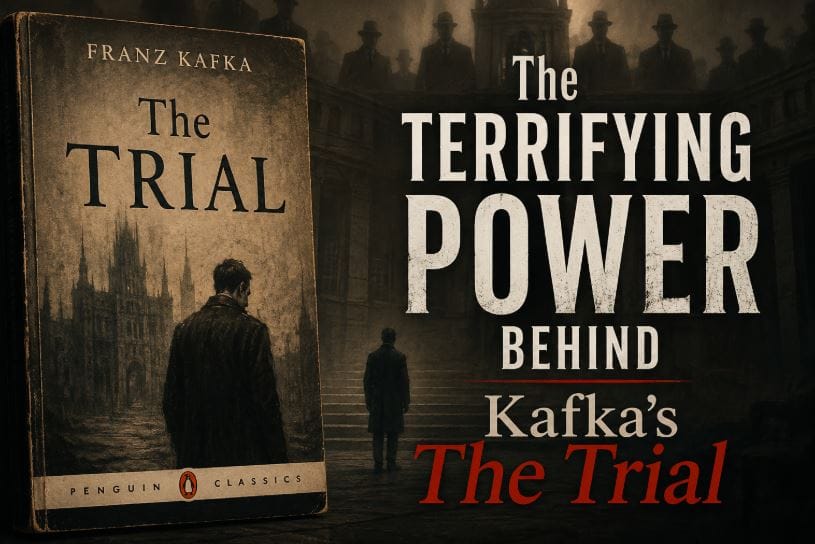
The Terrifying Power Behind Kafka’s The Trial
Kafka’s Vision of Faceless Authority
Franz Kafka’s The Trial is more than a story about bureaucracy; it is a profound exploration of power without accountability. Josef K. is arrested and tried by an opaque legal system, yet he never learns the nature of his crime. Kafka uses this faceless authority to reveal how systems can dominate lives without transparency, fairness, or human connection.
The Psychological Weight of Invisible Control
The novel immerses readers in the anxiety, confusion, and helplessness experienced by Josef K. Kafka captures how faceless power creates constant psychological strain. The fear is not only legal but existential: the individual is trapped in a world where rules exist, yet their logic is unknowable, amplifying vulnerability and despair.
Symbolism of Bureaucracy
Every element of The Trial—endless corridors, mysterious offices, and incomprehensible officials—symbolizes systemic control that operates beyond human comprehension. Kafka presents bureaucracy as a mechanism that dehumanizes, alienates, and enforces obedience without moral justification. Power exists without a face, but its consequences are devastatingly real. Also read Why The Trial Frightened Systems of Power
Authority as a Mirror of Existential Fear
The faceless system reflects a broader existential anxiety: the human struggle to find meaning in a world governed by incomprehensible forces. Josef K.’s futile efforts mirror the universal confrontation with unseen powers, whether societal, political, or metaphysical. Kafka shows that the terror of faceless authority is psychological as much as practical.
Social and Political Resonance
At the time of its publication, The Trial resonated as a critique of authoritarian and bureaucratic systems. Its depiction of an individual powerless before impersonal institutions challenged readers to consider the ethical implications of unchecked authority. Kafka’s work warns that systems can enforce control without accountability, transparency, or justice.
Enduring Relevance
The Trial continues to captivate because the fear of faceless power remains universal. From governments to corporate hierarchies, faceless authority shapes modern life, often invisibly. Kafka’s novel reminds readers that power without accountability is not just oppressive—it is existentially destabilizing.
In essence, The Trial exposes the psychological and societal consequences of faceless authority, revealing how systems of power can dominate human life without ever showing their face.
| Get Book on Amazon |