The Secret Life of Books Hidden stories. Untold truths. Every book
Banned Book Spotlight: Where the Wild Things Are by Maurice Sendak
Why the Book Still Matters Today
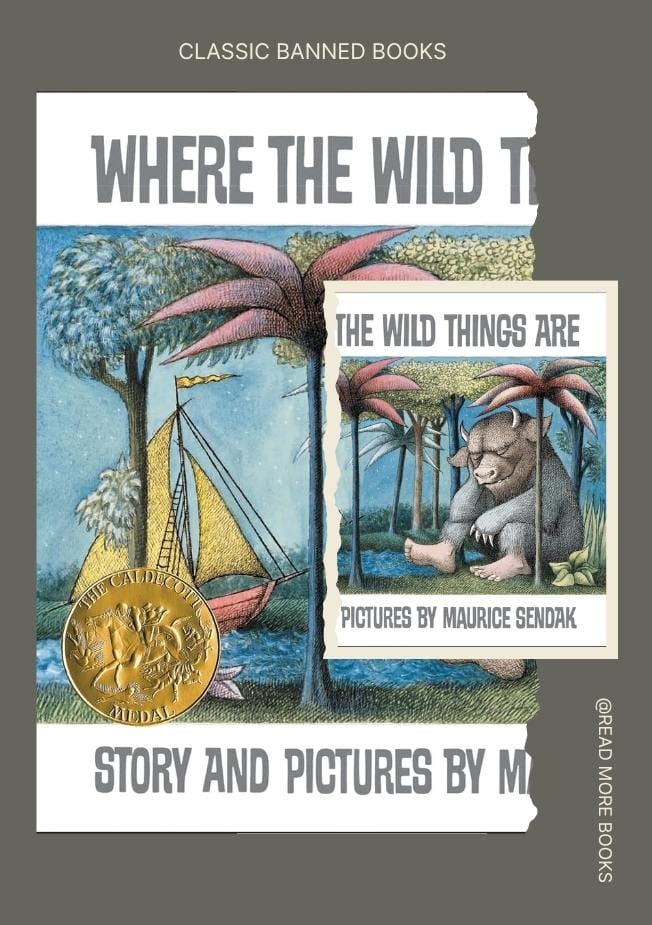
Published in 1963, Where the Wild Things Are is a groundbreaking children’s picture book that explores anger, imagination, and emotional release. It follows a young boy who escapes into a wild fantasy world where he confronts powerful creatures that mirror his own feelings.
Even today, in a world where children’s emotions are often misunderstood or minimized, the book remains a powerful reminder that anger and imagination are both natural—and that being “wild” is part of being human.
✦ Content and Themes
Though short and simple, the story carries deep emotional meaning:
Emotional expression – Max’s anger is acknowledged rather than punished or ignored.
Imagination as coping – The wild world becomes a safe space to process feelings.
Power and control – Max becomes “king,” exploring authority and responsibility.
Separation and return – He eventually returns home, seeking love and security.
Acceptance of emotions – The story validates complex childhood feelings.
Its minimal text and strong imagery make its emotional impact even stronger.
✦ About the Author: Maurice Sendak
Maurice Sendak was an American writer and illustrator known for revolutionizing children’s literature. He believed children could handle complex emotions and darker themes, and he refused to simplify childhood experience into only happiness and innocence.
Where the Wild Things Are became his most iconic work, reshaping how society views children’s emotional worlds.
✦ Why Where the Wild Things Are Was Banned or Challenged
Despite its classic status, the book has been challenged due to:
Scary imagery – Some adults found the “wild things” too frightening for children.
Themes of rebellion – Max’s behavior (anger, mischief) was seen as disobedient.
Emotional intensity – The portrayal of anger and isolation raised concerns.
Non-traditional storytelling – Lack of moral punishment for behavior disturbed some critics.
Over time, these challenges have often reflected discomfort with emotional honesty rather than the story itself.
✦ Final Thought
Where the Wild Things Are was not written to tame emotions—it was written to understand them. It shows that even in moments of anger and chaos, a child’s need for love and belonging never disappears.
Reading it today is more than revisiting a childhood classic—it is a reminder that every “wild” feeling is part of what makes us whole.