The Secret Life of Books Hidden stories. Untold truths. Every book
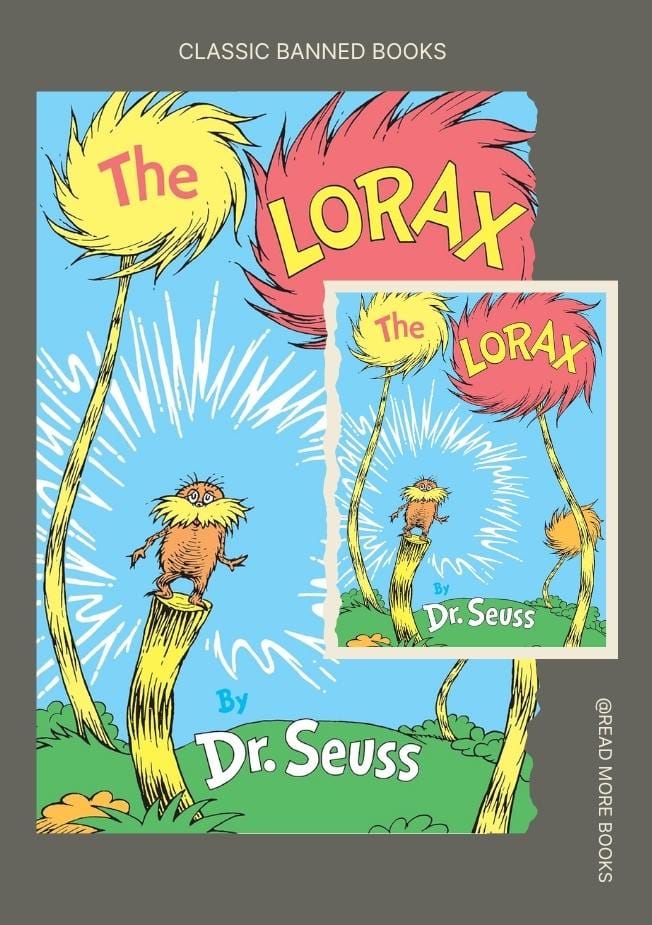
Banned Book Spotlight: The Lorax by Dr. Seuss
Why the Book Still Matters Today
Published in 1971, The Lorax is one of the most powerful environmental stories in children’s literature. Through a simple yet striking tale, it explores how greed, consumption, and industrial expansion can destroy the natural world—and how silence can make that destruction possible.
Even today, in a world facing climate change, deforestation, and ecological crisis, The Lorax feels more urgent than ever. It is a reminder that nature does not speak for itself—unless someone chooses to speak for it.
✦ Content and Themes
Behind its colorful rhymes lies a serious warning:
Environmental destruction – The story shows how unchecked industry damages forests and wildlife.
Greed vs. responsibility – Profit-driven decisions lead to long-term ecological collapse.
Silencing of nature – The Lorax “speaks for the trees,” highlighting environmental advocacy.
Consumer responsibility – The story questions human demand and overconsumption.
Hope and accountability – Even after destruction, the possibility of change remains.
Its simplicity makes its message accessible—but also deeply unsettling.
✦ About the Author: Dr. Seuss
Dr. Seuss (Theodor Seuss Geisel) was an American writer and illustrator known for his imaginative storytelling and rhythmic style. While most of his works are playful and humorous, The Lorax stands out as his most direct moral and environmental message.
Through this book, he shifted from pure entertainment to powerful social commentary.
✦ Why The Lorax Was Banned or Challenged
Despite its popularity, the book has faced criticism and restrictions due to:
Criticism of industry and capitalism – Some saw it as anti-business or politically charged.
Environmental messaging – Logging and industrial groups objected to its portrayal of exploitation.
Perceived negativity – Some educators felt its tone was too dark for children.
Economic concerns – Debate over how it represents production and job loss.
Its challenges often stem from its honesty about environmental consequences.
✦ Final Thought
The Lorax was not written to create controversy—it was written to create awareness. It asks a simple but urgent question: what happens when no one speaks for the earth?
Reading it today is more than revisiting a children’s story—it is a reminder that silence is never neutral, and responsibility always begins with speaking up.